Collection

Poem Field

4 titles · in release order

Poem Field is the name of a series of 8 computer-generated animations by Stan Vanderbeek and Ken Knowlton in 1964-1967. The animations were programmed in a language called Beflix (short for "Bell Flicks"), which was developed by Knowlton.
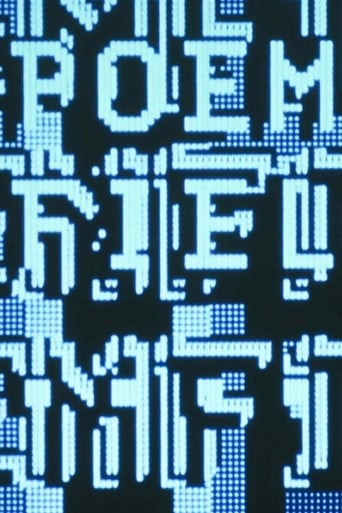
Poem Field No. 1Poem Field No. 1 · 1967
Poem Field No. 1
1967
MovieAnimation
"Words pulsate, then bleed into abstraction. Fields of color fragment into pixels or smear into mutating organisms. Swarming text grids explode into chaotic rainbow clouds, blinking dots, stars, and spirals. Snaking orange lines and pointillist textures form strobing mandalas, mosaic embroidery, and Pac Man architecture, tumbling geometries of throbbing color that dissolve into blue, pink, yellow, and green pixel noise." - Leo Goldsmith, writing about VanDerBeek's Poemfield series
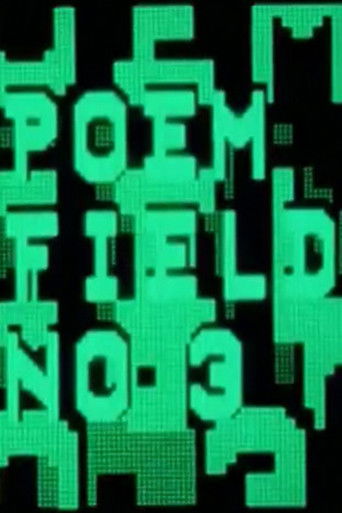
Poem Field No. 3Poem Field No. 3 · 1967
Poem Field No. 3
1967
MovieAnimation
In this pioneering work of early computer art, geometric groupings of monochrome patterns and words are created with the program BEFLIX, which was developed in the 1960s by Bell Telephone Laboratories programmer Kenneth Knowlton.
Poem Field No. 7Poem Field No. 7 · 1967
Poem Field No. 7
1967
MovieAnimation
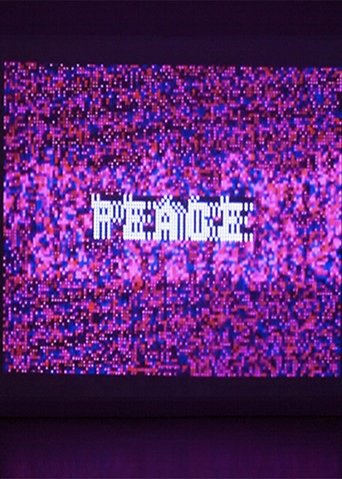
"Calligraphic computer animation of the enigmatic poem 'There is no way to peace- Peace is the way.' Black and white animation is colored by Brown/ Olvey. This film with soundtrack by John Cage is a lyric accidental stylization of christian myth/crosses. The patterns are written by random programs on a computer with help by Ken Knowlton." S.V.
Poem Field No. 5: Free FallPoem Field No. 5: Free Fall · 1968
Poem Field No. 5: Free Fall
1968
MovieAnimation
COMPUTER ART SERIES is animated computer/graphic films. The series is called POEMFIELD. All of these films explore variations of poems, computer graphics, and in some cases combine live action images and animation collage; all are geometric and fast moving and in color. There are eight films in the computer animated art series. As samples of the art of the future all the films explore variations of abstract geometric forms and words. In effect these works could be compared to the illuminated manuscripts of an earlier age. Now typography and design are created at speeds of 100,000 decisions per second, set in motion a step away from "mental movies." POEMFIELD No. 2 and 5 are all colorized by Brown and Olvey.